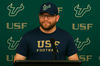

Tigers bypass splashier candidates in favor of veteran defensive architect with deep Southern roots
By Connor Whitfield | Jan 7, 2019, 8:42am EST

The name wasn't on many early lists.
It certainly wasn't the splashy hire most LSU fans expected.
And that is exactly why Tuesday's announcement caught much of the college football world by surprise.
LSU has named Troy head coach Wayne Bolt as its next head football coach, ending a search that featured some of the biggest names in the profession and one that many believed would conclude with a far more recognizable hire.
Instead, Athletic Director Joe Alleva opted for experience, defensive pedigree, and a coach whose résumé spans nearly four decades in college football.
"Coach Bolt embodies the toughness, discipline, and leadership qualities we believe are necessary to return LSU football to championship contention," Alleva said during the announcement. "His track record of building defenses and developing players speaks for itself."
Bolt arrives in Baton Rouge with a modest 24-15 record as a head coach, a mark that immediately raised eyebrows among portions of the LSU fanbase. Compared to the résumés of some other candidates linked to the position, Bolt's record does not jump off the page.
But LSU officials were looking beyond the win-loss column.
Few coaches in the country can match the depth of Bolt's coaching background.
A former All-American offensive lineman at East Carolina, Bolt began his coaching career under legendary coach Pat Dye, following him from East Carolina to Wyoming and eventually to Auburn. He later worked under Danny Ford at Clemson before returning to Auburn for another stint.
His longest and most influential stop came at Troy.
Bolt joined Larry Blakeney's staff in 1991 as offensive line coach before eventually becoming defensive coordinator and assistant head coach. Under his leadership, Troy developed one of the nation's most respected defenses. In 2002, just the Trojans' second season competing at the Division I-A level, Troy ranked fourth nationally in total defense, allowing only 276.8 yards per game.
That success eventually led to opportunities at UAB, Iowa State, and Auburn, where he reunited with Gene Chizik. When Chizik accepted the Auburn head coaching position in 2009, he personally brought Bolt onto the staff as Director of Football Relations.
Following Auburn's coaching change in 2012, Bolt returned to Troy as defensive coordinator and eventually became head coach, helping guide the Trojans into one of the Sun Belt's most consistent programs.
Over the course of his career, Bolt has coached on ten bowl teams and helped develop more than twenty future NFL players.
Those credentials appear to have resonated strongly with LSU decision-makers.
Still, the hire is likely to be remembered as much for who LSU didn't hire as who they did.
Arkansas head coach Porter Davis loomed over the search from the very beginning.
Davis was heavily linked to the LSU opening before the Tigers ultimately hired Matt Limegrover ahead of the 2017 season. Two years later, after leading Arkansas to an SEC Championship, a Sugar Bowl victory, and the school's first 12-win season, many around the sport viewed him as the obvious choice.
Several national outlets went as far as describing Davis as the favorite if LSU could convince him to leave Fayetteville.
That never happened.
While neither side has publicly commented on the extent of LSU's interest, multiple reports indicate Davis was never seriously involved in the later stages of the search. Whether that was because Arkansas' coach had no desire to leave, or because LSU preferred a different direction, remains a topic of debate throughout SEC circles.
Regardless, many fans will inevitably view the decision as a missed opportunity.
The comparison becomes even more striking when considering the trajectories of the two coaches.
Davis just completed one of the greatest one-year turnarounds in conference history. Bolt, meanwhile, arrives from the Sun Belt with fewer than forty games of head coaching experience.
Yet LSU officials insist this was never about making the biggest splash.
The Tigers are coming off a disastrous 2-10 season after going 9-4 just one year earlier. Program leadership reportedly prioritized stability, defensive toughness, and long-term program building over headline-grabbing name recognition.
In Wayne Bolt, they believe they found exactly that.
Whether LSU fans agree remains to be seen.
For now, the Tigers have handed one of college football's most prestigious jobs to a veteran coach who spent decades earning respect throughout the profession rather than building a national brand.
It may not have been the hire fans expected.
But LSU is betting it will be the one they need.